



Samsung Electronics will reportedly use rival TSMC’s 3-nanometer manufacturing process to produce base dies for Nvidia’s next-generation custom high-bandwidth memory (HBM) chips, according to a report by the Seoul Economic Daily.
The reported deal would mark the first time Samsung and TSMC have worked together at the HBM manufacturing stage, bringing two major semiconductor rivals together to support Nvidia’s AI hardware.
Nvidia has reportedly asked Samsung, SK Hynix, and Micron Technology to use TSMC’s 3nm process for the base dies, while using sixth-generation DRAM technology for the memory chips’ core dies.
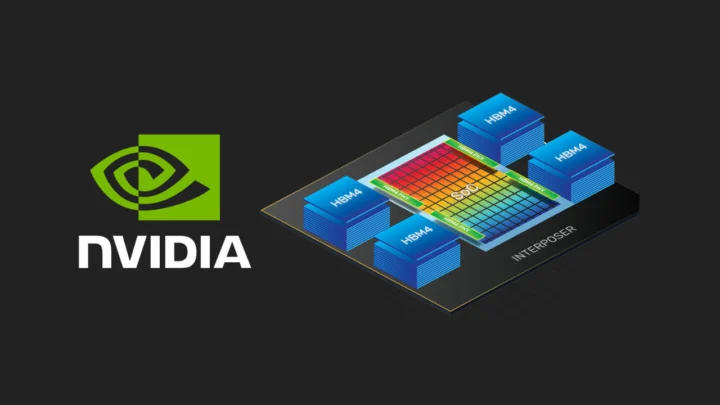
The approach is tied to Nvidia HBM (NVHBM), a custom memory technology unveiled in August. It integrates Nvidia’s own memory controller into the base die, with the goal of standardizing the architecture across different memory suppliers.
Moving the memory controller to the base die is intended to free up space on Nvidia’s graphics processors for additional computing circuits. The design could also make it easier for Nvidia to work with multiple memory manufacturers using a common architecture.
This means Samsung would continue manufacturing the memory layers while relying on TSMC’s process for the base die. They also accepted Nvidia’s requirements following an internal review, although it plans to retain its own manufacturing approach for standard HBM products and custom memory developed for other customers.
Furthermore, Samsung is reportedly assessing whether its own foundry business could manufacture NVHBM base dies if TSMC’s production capacity proves insufficient.
The development could expand TSMC’s role in Nvidia’s AI supply chain beyond manufacturing processors, while allowing Nvidia to source memory from multiple suppliers using a more consistent design.
The reported collaboration comes as demand for high-bandwidth memory continues to grow alongside AI accelerators and data center hardware. HBM is particularly important for AI workloads because it provides high-speed access to the large amounts of data used by processors.
For Samsung, the arrangement could provide another opportunity to supply memory for Nvidia’s next-generation AI hardware, even as it relies on a competing foundry for part of the manufacturing process.
The companies have not publicly confirmed the reported arrangement.