


Today, when people think of elephants in Vietnam, they immediately think of Asian elephants living in the Central Highlands or kept in zoos in Hanoi and Ho Chi Minh City. However, the history of elephants on this S-shaped land is much longer. Millions of years ago, many ancient elephant species roamed the plains, plateaus, and valleys of Vietnam, leaving behind fossils that help paleontologists gradually reconstruct a picture of a completely different world .
Many ancient elephant species once lived in Vietnam.
The Elephantidae family today consists of only three living species: the Asian elephant and two African elephant species. However, in the past, this animal group was incredibly diverse. Southeast Asia, including Vietnam, is one of the important regions that recorded the presence of many ancient elephant species belonging to different genera such as Stegodon, Palaeoloxodon, and Elephas. They did not always live together, but appeared and disappeared sequentially according to climate and environmental changes during the Quaternary period.
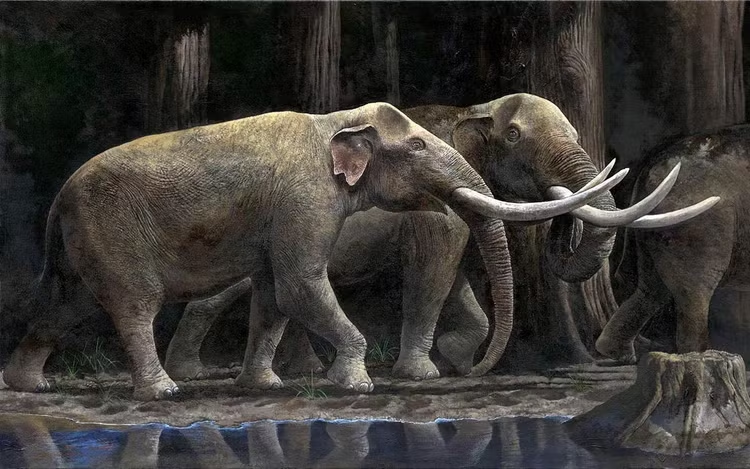
Stegodon the elephant. Photo: dinoanimals.com.
One of the most famous groups of elephants is the Stegodon, often called the mastodon. They lived from about 11 million years ago and survived until the end of the Ice Age in some parts of Asia. Stegodons are easily recognizable by their very long, almost straight tusks and molars with distinct ridges, unlike modern elephants. Many Stegodon fossils have been discovered in Vietnam, particularly in northern provinces such as Lang Son , Hoa Binh, Thanh Hoa, and other locations. Fossilized molars as large as an adult's hand suggest these were giant animals that once foraged in ancient forests and grasslands.
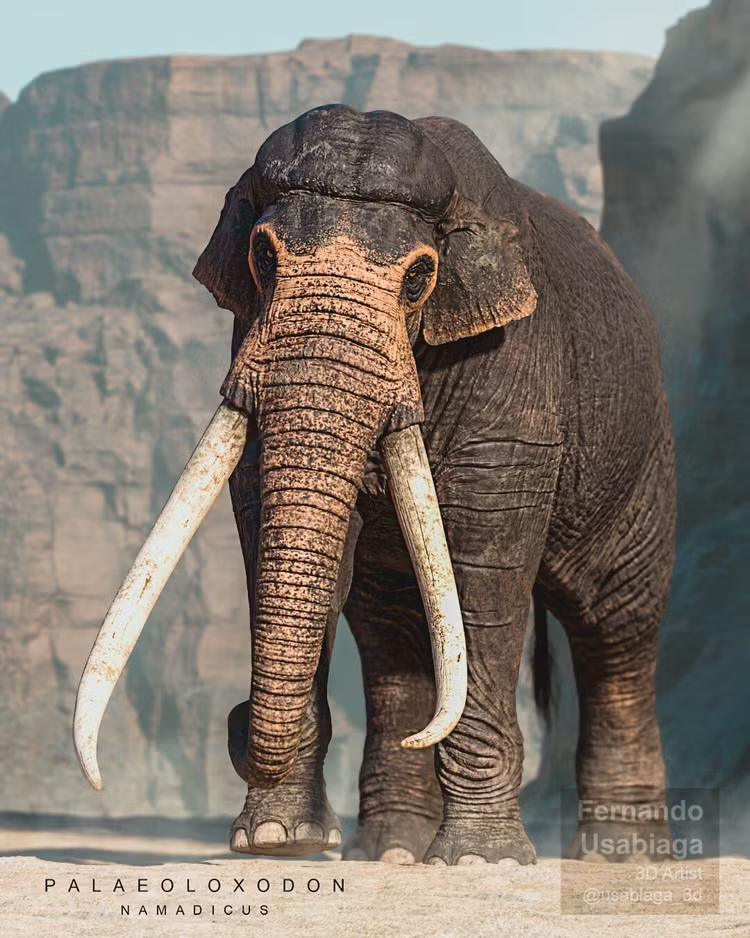
Palaeoloxodon elephant. Photo: ArtStation
Another species that once appeared in Vietnam was Palaeoloxodon, also known as the straight-tusked elephant. Some species in this genus surpassed even modern-day African elephants, with shoulder heights potentially exceeding 4 meters. They were widely distributed in Europe and Asia during the Pleistocene epoch. Fossils found in Vietnam indicate that this region was once within the range of these "giants." Based on the morphology of their teeth and bones, scientists have found that they adapted to environments with a mix of forests and shrublands.
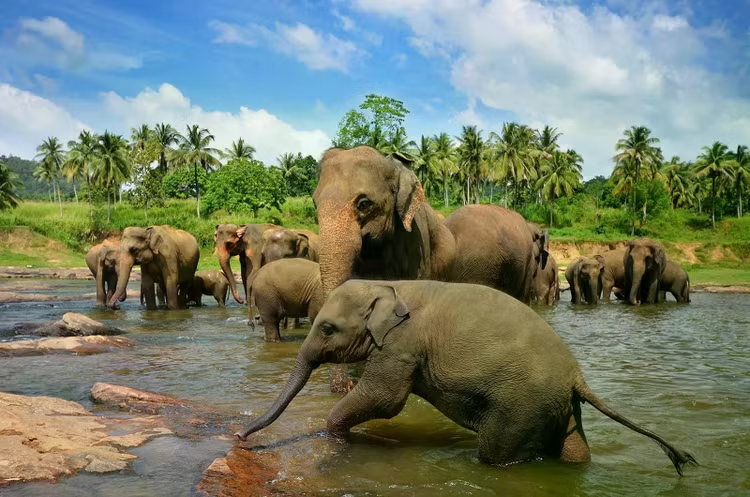
Modern Asian elephant (Elephas maximus). Photo: Britannica
Asian elephants - the last "descendants"
In addition, many fossils belonging to the genus Elephas, a close relative of the modern Asian elephant (Elephas maximus), have also been discovered. This reflects the gradual transition from ancient elephant species to those better adapted to tropical climates after the end of the Ice Age. Modern Asian elephants can be considered one of the last descendants of this long evolutionary lineage.
Fossil elephant discoveries in Vietnam are often found in limestone caves, ancient river terraces, or sedimentary layers. Many well-known sites such as Tham Khuyen and Tham Hai (Lang Son), caves in Hoa Binh, and the Dong Nai River basin have yielded valuable fossilized teeth, bone fragments, and tusks. Numerous specimens have been discovered alongside fossils of rhinoceroses, wild cattle, deer, wild boars, and other large mammals, demonstrating that prehistoric Vietnam possessed an incredibly rich fauna.
These fossils not only help identify extinct elephant species but also provide information about ancient climates. The structure of their molars allows researchers to deduce their diets, thus determining whether the area was primarily dense forest, woodland, or grassland. The isotopic composition of the enamel also helps to reconstruct the temperature and environmental conditions hundreds of thousands of years ago.
An interesting question is whether ancient humans in Vietnam ever encountered these elephant species. The answer is most likely yes. Prehistoric humans of the Homo genus appeared in Southeast Asia while some ancient elephant species still existed. Although there is no clear evidence that ancient inhabitants of Vietnam hunted elephants on a large scale as in some other parts of the world, the simultaneous presence of human and elephant fossils in some cultural layers suggests that the two groups once shared a common habitat.
By the end of the Ice Age, warming climate, changing vegetation, and increasing human pressure led to the gradual disappearance of many ancient elephant species. Only the Asian elephant survives to this day, but its population is also declining sharply due to habitat loss and conflict with humans.
Fossilized teeth lying quietly in museums and laboratories are not just the remains of extinct creatures. They also tell the story that Vietnam was once a land where herds of giant elephants roamed through forests and grasslands hundreds of thousands, even millions of years ago. Each new discovery adds another piece to the country's natural history, reminding us that beneath the familiar soil of today lie countless secrets of a lost world.