


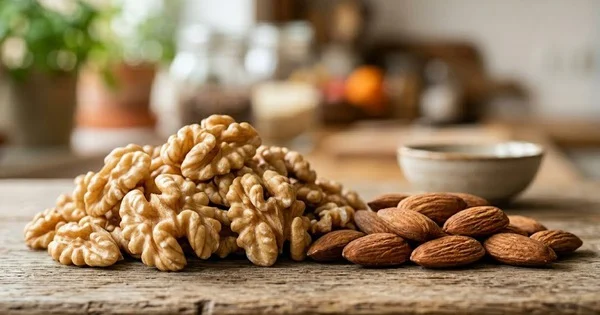
1. Why nuts are good for cardiovascular health
Nuts are a great choice for cardiovascular health, as they are a source of essential nutrients that can reduce inflammation, lower cholesterol, and improve overall heart health.
Nuts are considered good for cardiovascular health because they contain the following substances:
- Antioxidants such as vitamin E.
- Essential nutrients such as magnesium and potassium.
- High in fiber.
- Good fats, primarily monounsaturated and polyunsaturated fats.
- Omega-3 fatty acids are known for their ability to reduce inflammation.
2. How do walnuts support cardiovascular health?

Choosing which type of nut is better depends on your health goals, but consider alternating between both to maximize cardiovascular health benefits.
Walnuts are often considered one of the best nuts for cardiovascular health. They are a rich source of omega-3 fatty acids, primarily alpha-linolenic acid (ALA) – a plant-based omega-3. Omega-3 fatty acids play a crucial role in reducing inflammation and supporting overall cardiovascular health.
Walnuts contain approximately 2.5 grams (g) of ALA per ounce (a serving is about 28 g). They also contain many powerful antioxidants such as polyphenols, which can help fight oxidative stress (an imbalance between harmful free radicals and beneficial antioxidants that help neutralize them).
The benefits of walnuts for cardiovascular health include:
Improving cholesterol: One study showed that healthy older adults who ate half a cup of walnuts daily for two years had lower levels of low-density lipoprotein (LDL) cholesterol, including the kind associated with heart disease. A serving of walnuts also contains 2 grams of fiber , which can also improve cholesterol levels.
Improved blood pressure: One study examined replacing saturated fat with walnuts. Participants who ate whole walnuts daily in combination with lower saturated fat intake experienced lower central blood pressure. Central blood pressure (the pressure in the ascending aorta) is an indicator of cardiovascular events, such as heart disease and stroke.
Improved arterial function: Walnuts have been found to improve endothelial function (the health of the lining of blood vessels), which is essential for arterial health.
Reduced inflammation: Studies show that people in their 60s and 70s who regularly eat walnuts may experience reduced inflammation. Reduced inflammation levels are associated with a lower risk of heart disease.
3. How do almonds support cardiovascular health?
Thanks to their high content of monounsaturated fats, almonds are very beneficial for cardiovascular health. Almonds are also rich in vitamin E, fiber, essential minerals such as calcium, potassium, phosphorus, and magnesium, as well as phytonutrients such as flavonoids, plant sterols, and phenolic acids.
The key nutrients in almonds that have been shown to be essential for cardiovascular health include:
Monounsaturated fats: Almonds are rich in heart-healthy fats that help lower total and LDL cholesterol levels.
Vitamin E: Walnuts are a rich source of vitamin E, which helps prevent oxidative stress. Oxidative stress plays a role in the development of heart disease.
Magnesium: Almonds are an excellent source of magnesium, which helps support vascular health and regulate blood pressure.
Some benefits of almonds for cardiovascular health.
Lowering LDL cholesterol: Numerous studies have examined the effects of almonds on blood lipid levels (phospholipids, sterols, and triglycerides). These studies suggest that almond consumption may lead to a reduction in cholesterol levels of up to 25% and a reduction in LDL levels of up to 35%.
Increased high-density lipoprotein (HDL) cholesterol: HDL cholesterol is often called "good cholesterol" because it helps transport LDL cholesterol from the arteries to the liver, where it is broken down and eliminated from the body. Studies have shown that consuming almonds may be helpful in increasing or maintaining HDL levels.
Lowering blood pressure: Consuming almonds has been linked to lower blood pressure, which can improve cardiovascular health and reduce the risk of heart disease. This may be due to monounsaturated fats and heart-healthy minerals such as magnesium and potassium.
Reduced risk of cardiovascular disease: Numerous studies have linked almond consumption to a reduced risk of cardiovascular disease. A 2020 review of studies found that consuming 1.5 ounces of almonds is a cost-effective way to prevent cardiovascular disease in the short term and possibly in the long term.

4. Walnuts or almonds: Which is better?
The answer to which type is better depends on your cardiovascular health goals:
Walnuts contain omega-3 fatty acids and have anti-inflammatory benefits: If you're looking for omega-3 fatty acids and anti-inflammatory benefits, walnuts may be a better option. Almonds contain a small amount of ALA, far less than the amount found in walnuts.
Almonds are rich in magnesium and potassium, which help control blood pressure: You might consider almonds if you're looking for a good source of magnesium and potassium to help manage your blood pressure.
Almonds and LDL and HDL : Almonds also appear to have a slight advantage in lowering LDL and improving HDL levels.
This is because almonds are a richer source of monounsaturated fats, which are known to lower cholesterol levels.
Both walnuts and almonds can be part of a heart-healthy diet, and incorporating one or both of these nuts can offer significant cardiovascular health benefits. Consider alternating between the two, as both are nutritious choices that help protect the heart.