



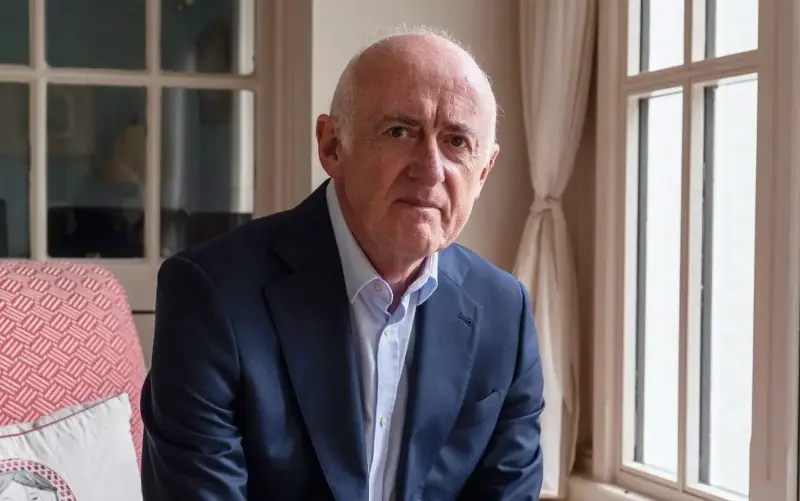
Our series The Expert View brings you specialist health advice from professionals. In this article, we hear from Dr Seamus O’Mahony, a consultant gastroenterologist who worked in NHS hospitals for more than 30 years, about why our obsession with living longer has gone too far – and why the science behind the billion-dollar longevity industry doesn’t live up to the hype.
Dr Seamus O’Mahony has spent most of his career contemplating death, becoming increasingly troubled by the way modern medicine has over-medicalised dying, stripping humanity from the end of life.
“In the pre-technological, pre-science era, the very few old people were revered for their knowledge and wisdom, whereas now we hide elderly people in nursing homes, and we fear death more than ever.”
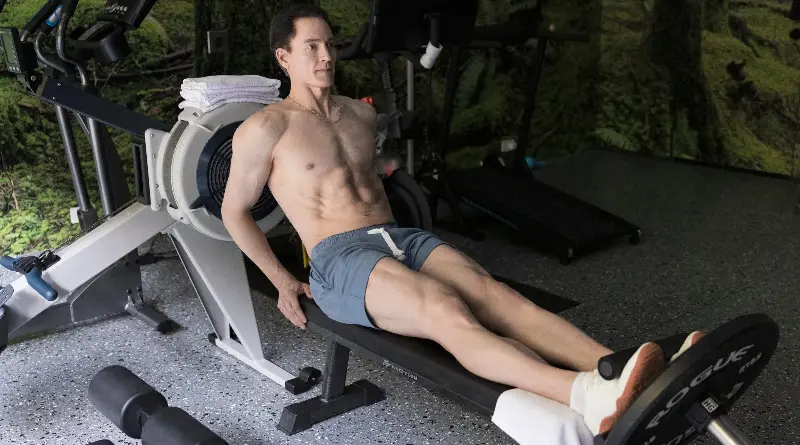
Now, he has turned his focus to what he calls “the flip-side of the subject of death”: our collective obsession with longevity. It’s all around us: from anti-ageing influencers such as Bryan Johnson, whose personal mantra is “Don’t Die”, to supplements promising cell rejuvenation and tests claiming to reveal our biological age.
Dr O’Mahony’s interest in it was first piqued by Aubrey de Grey at the Longevity Summit in Dublin in 2024. The bearded old-Harrovian gerontologist believes that medical technology may enable humans to avoid dying from age-related causes.
“I thought, what’s going on in this world?” he says. “There were so many different types of people: scientists, longevity doctors, salespeople, biotech people, investors… I thought, this is an incredible cultural phenomenon.”
In his new book, The Longevity Delusion: Money, Myths and Bad Science, Dr O’Mahony interviews some of the movement’s leading figures, including de Grey, and challenges the idea that we can, or should, outwit ageing.
The truth about longevity science
For Dr O’Mahony, our obsession with longevity is all the more fascinating because of one simple fact: despite decades of research, “No intervention whatsoever has ever been shown to delay the ageing process in humans,” he says. He’s not talking about lifestyle choices such as diet and exercise, which have been shown to reduce the risk of disease and help us live longer, healthier lives, but “medical treatments such as drugs, or some biotechnological treatment such as stem cells or epigenetic reprogramming”.
Scientists have managed to extend the lifespan of worms, fruit flies and mice, using everything from calorie restriction to drugs such as rapamycin. “But the roundworm has fewer than 1,000 cells, compared to the human body, which has 35 trillion,” he says. “The human body is the result of millions of years of evolution and a fantastically complex entity.”
As for the idea that a pill, injection or “biohack” is just around the corner, he says: “From my interviews with several of the most prominent biogerontologists, who have spent their careers studying the biology of the ageing process, and my wide reading of the scientific literature, I deduced that we don’t really understand the ageing process.
“And the consensus from these scientists was that there was no prospect in the short or medium term of some dramatic breakthrough that would significantly lengthen human lifespan.”
One of the experts he spoke to was Prof David Gems, a biogerontologist at University College London, who has spent more than three decades studying the biology of ageing. “Twenty years ago, he was writing papers saying that the biology of ageing would be understood by now, and it would be highly likely we’d have treatments for ageing,” Dr O’Mahony says.
“He was writing papers about how everyone living longer would impact society. Now, towards the end of his career, I was astonished that he told me, ‘I don’t worry about those things anymore, because it’s not going to happen.’”
So if science isn’t even close to delivering a magical elixir of youth despite a longevity industry worth billions, why are we so captivated by the idea?
Why have we become so scared of ageing?
“Over the course of my lifetime, a series of societal trends have gradually led to this current explosion of interest in longevity,” he says.
It’s a subject that brings together two of Dr O’Mahony’s long-standing preoccupations: our determination to prolong life and our discomfort with the fact it must end. He explored our changing relationship with death in his acclaimed 2016 book The Way We Die Now and later contributed to a major Lancet commission examining our relationship with mortality.
The first factor, he believes, is the decline of religion, which once promised eternal life after death. “In our secular society, all we see at the end of human life is oblivion,” he says.
Feeding into this is the idea of “successful ageing”, which became popular in the US in the 1980s. “There’s a myth that health is entirely a personal responsibility, and if you do all the right things, you won’t fall prey to the diseases of old age, become disabled, or lose your independence,” he says. “If you look at media images of old age, they’re all jogging and windsurfing octogenarians.
“This is sending out completely the wrong message. Most of us will be ill and frail for some time before we die. And you can have the healthiest lifestyle possible and it doesn’t preclude you getting an illness that will cut your life shorter than you hoped.”
All this has culminated in an increasingly warped view of ageing and physical decline as some kind of personal failure. “We don’t know what to do with old age or old people anymore.
“We cannot attach any moral or spiritual value to ageing and death in the way that previous generations did. To us, old age is to be fended off. Death is to be postponed for as long as possible. That’s what’s forcing us into this frenetic pursuit of longevity.”
The ultimate luxury
For the super-rich, longevity has become “a huge status symbol”, he says. “Once billionaires have accumulated the yachts, private jets and homes around the world, the only luxury remaining is more time.”
Their efforts to attempt to buy this are eye-popping. Many pay hundreds of thousands of dollars to doctors who offer exhaustive health checks, from whole-body MRI scans to genome testing, in the hope of heading off potential problems.
Others, such as de Grey, whom O’Mahony refers to as “like a cult leader, because he’s got this intensity of conviction”, have signed up for cryopreservation. After death, de Grey’s head will be frozen, in the hope that some future technology might be able to resuscitate him. “What would a future world do with a head-only Aubrey?” he asks wryly. “What would any future world do with these resurrected zombies?”
The star speaker at the Longevity Summit in Dublin was entrepreneur and space tourism pioneer Peter Diamandis, the founder of the XPrize Foundation, which has offered a $101m (£76m) prize for research aimed at restoring a decade, or ideally two, of physical and cognitive function in people aged 65-80.
“During his presentation, Diamandis asked, ‘How much of your wealth would you give up for an extra 20 years of life?’ His answer was three quarters, if not all,” says O’Mahony. Diamandis also predicted that Elon Musk, who has not yet embraced the movement, will be “all in” on longevity when he reaches his 60s.
In this rarefied world, the normal limits of human achievement have already been pushed to their extremes, so the idea of one day conquering death does not seem impossible – particularly in Silicon Valley, where O’Mahony says ageing is viewed as “just another technological challenge awaiting a solution”.
The trouble with tech
Tech titans, he says, have a tendency to view the human body’s decline through the prism of technological progress. “A lot of people at the summit, particularly those running biotech companies, had backgrounds in computer science, physics and engineering, rather than biology or medicine,” he says. “They are very open about their view that the human body is a machine, and that to overcome ageing, and even death, that machine needs to be reprogrammed.”
But in his book, he quotes an article written by the science journalist Derek Lowe. “He wrote that an Intel microchip is the instructions on the back of a shampoo bottle compared to the complexity of a living system,” he says. “The idea of the body as a programmable dataset is a delusion.”
But although it’s tempting to dismiss the more outlandish longevity enterprises as “a harmless fantasy”, he believes they’re drawing our attention away from more important questions.
“It’s distracting us from our humanity, our connection with others, our relationship with nature,” he says. “We now believe we are masters of nature, not part of it, and that’s driving this longevity movement.”
A better way of living – and dying
In reality, he says: “The two most powerful longevity drugs are money and education.” In Britain, those who are financially secure and better educated tend to live considerably longer and spend more of their lives free from chronic disease and disability.
Perhaps the most shocking moment of Dr O’Mahony’s research came when he mentioned this fact to scientists, investors and biotech people within the longevity community. “They were astonished that anybody would care about these social determinants, and they were quite upfront that they had zero interest in anything that might improve public health in general,” he says.
“So what I took away from that is that this world really is all about money. They don’t really care about extending human longevity.”
This doesn’t mean there is nothing we can do as individuals. O’Mahony says many of the things that help us live longer and healthier lives are well established – they’re just not very exciting.
“Don’t smoke, drink in moderation, exercise regularly, eat a diet free of processed foods and limited in meat, try to maintain social connections and have a meaning and purpose in life,” he says.
The aim, he believes, should not necessarily be to live to be ancient, but to develop a healthier relationship with ageing and death.
Ageing, he says, “can bring richness and joy to our lives, and give us things we never had when we were middle-aged or young. It’s looking back honestly on our lives and trying to come to terms with our failings. And the final stage of that is preparing for death. Death is not something that we need to hide away from or banish from our thoughts. It actually has value.”
The Longevity Delusion: Money, Myths and Bad Science by Seamus O’Mahony (Head of Zeus, £20) is out now