


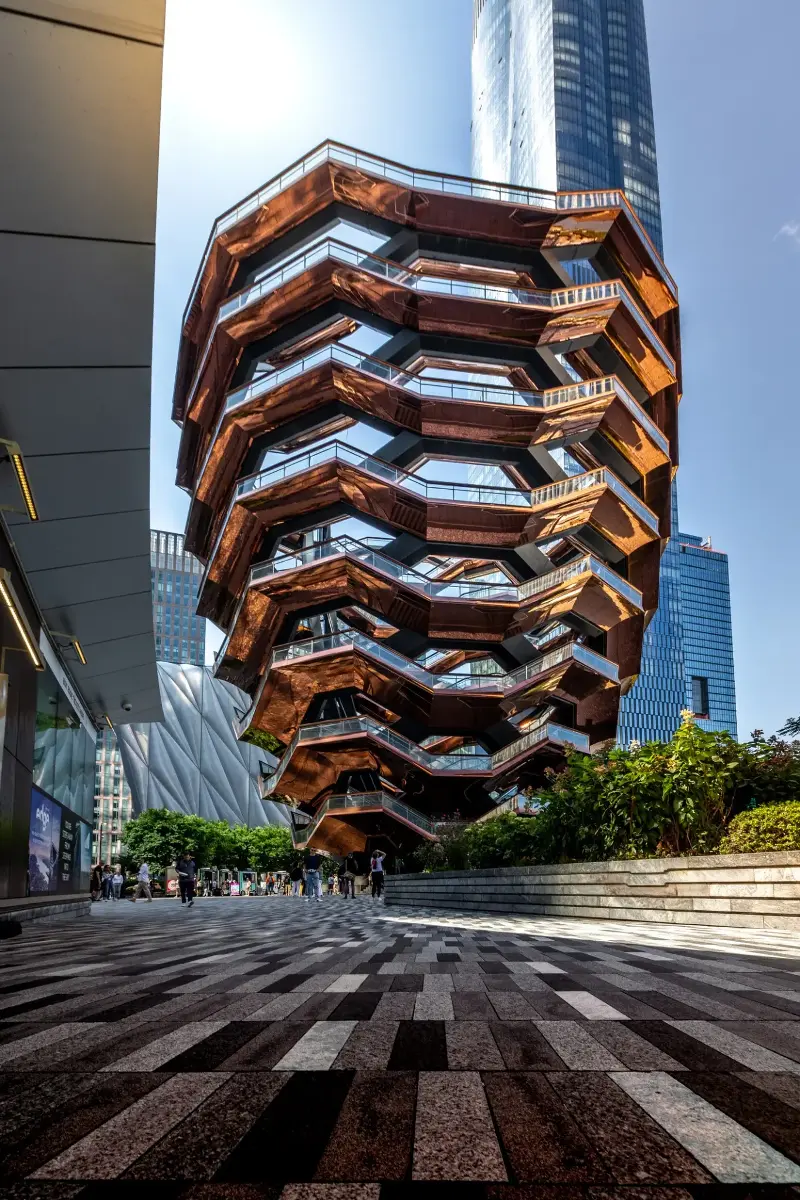
In an age when architects and developers compete for record-setting, sky-high structures, one designer focuses not just on how buildings look but also on how they make us feel.
Thomas Heatherwick, the designer of The Vessel in New York City and the Olympic cauldron of the 2012 Summer Olympics, is the founder of the Heatherwick Studio, an architecture and design firm with offices in London and Shanghai. The firm wants to “see a world where the buildings and places around us are radically more joyful, engaging and human,” the company says.
In 2023, Heatherwick launched “Humanise,” a 10-year global campaign to combat the “blandemic” and “stop the spread of boring soulless buildings” to address “the public health issues caused by boring buildings.” The campaign has now launched a £1.5 million (over $2.2 million) research project to explore how buildings and streets in the United Kingdom could promote health and well-being.
“Buildings in our towns and cities are experienced by millions of us every year as we pass by, and profoundly affect how we feel, yet we’ve spent decades designing buildings with a narrow definition of function, led by efficiency and cost, and too much focus on the needs of the people who use them inside,” Heatherwick told architecture and design magazine Dezeen this month.
Why Have Buildings Become ‘Bland’?
The answer isn’t so much about design taste as about numbers and the pressures behind building projects.
Aiste Dzikaraite, a London-based architect and founder of Floa Design, told Newsweek that most contemporary architecture has become “flat and faceless” because “square area numbers dictate the price of the building.”
Dane Danielson, senior architect and project manager at Barge Design Solutions, a Nashville-based architecture and engineering firm, shared a similar take on why modern architecture has become “overly monotonous in many places,” but noted “I don’t think the problem is contemporary architecture itself,” and that it’s more about how we deliver buildings.
Danielson told Newsweek: “We have become very good at measuring performance,” but many of the fundamental qualities that make architecture meaningful, such as character, delight, surprise, movement, identity, and a sense of belonging, are much harder to quantify.
“The result can be buildings that perform their basic functions but don’t necessarily give people a reason to care about them. This is a problem,” he said.
American architect and engineer Charles Bloszies agrees with Heatherwick’s assessment of the contemporary urban landscape being “bland,” and that it would be great to “raise the bar on background architecture.”
However, “very few in our industry develop or design buildings that are soulless and boring on purpose,” Bloszies told Newsweek, noting that the “urban fabric is created one stitch at a time—sometimes circumstances call for a stitch that shouts out and sometimes one that blends in.”
Emotion as a Design Function
Heatherwick urges planners and developers to “recognize emotion as a function of design,” Abigail Scott-Paul, the global head of the Humanise campaign, told Newsweek.
Scott-Paul noted that “for too long, we’ve prioritized functionality and efficiency while overlooking how buildings make people feel. Yet a growing body of evidence shows that the look and feel of buildings can affect our health and well-being, and we know the public is hungry for a different approach to development.”
Research by Thinks Insight & Strategy found that 52 percent of people want to be involved in how buildings in their area look, but 67 percent feel powerless.
Scott-Paul believes buildings must be functional, efficient, and sustainable, but also bring more joy to everyday life, foster a sense of belonging, and give people pride in where they live.
“People’s emotional response should be a core measure of design success,” she said, noting “that is how we begin to turn the tide on the blandemic and create places that respond better to what people truly need from them.”
The Impact of AI
According to the Royal Institute of British Architects (RIBA), 70 percent of design firms now use artificial intelligence (AI), at least occasionally, during early design-stage visualizations, as noted in a June 2025 study in Automation in Construction.
While 57 percent said they anticipate “significant productivity gains from AI,” 35 percent expressed concern that “AI could threaten the profession,” the study said.
Scott-Paul believes AI and automation could be “hugely valuable” if used to expand our design capacity, rather than narrow it. She said they can help us test more possibilities, find ways to reduce cost and “deliver better and more human-centered design at scale.”
The risk is using technology simply to make the same thing faster and cheaper, but the opportunity lies in using it to make emotion a function of design from the start, and “create more joyful, human and engaging places at scale and affordably.”
These technologies cannot replace “the insight, imagination and creative judgement that human designers bring,” she warned, noting that “AI has no feelings.” She believes that ultimately “it’s emotions that make a difference, both to how we design places and how we feel about them.”
How To Make Buildings Better for Our Health
From a design perspective, Dzikaraite believes that elegant, curved buildings, along with places and paths that “invite people to slow down, to rest their eyes on changing perspectives and relax,” as well as “softer, organic design features that mimic natural forms,” can positively impact our mental health.
For Danielson, the healthiest buildings create a strong connection between people and place. He explained: “Design is not a checklist. It becomes powerful when we connect the design to the local community and the character of the place. A successful building should tell you something about where you are and why that place matters.”
Julie Somarriba, founder and principal adviser of Origin of Well, a real estate development and advisory firm focused on the intersection of human well-being, place, and investment, agreed with Danielson’s more holistic view, telling Newsweek that architecture is never just a visual experience.
“The environments we inhabit can influence how we feel, behave, connect with others, and whether we want to return,” Somarriba said, noting, “the goal isn’t simply to create more visually interesting buildings, but places that invite people to linger, gather, connect, and develop a sense of belonging.”
Looking Beyond Aesthetics
Alan Chandler, Research Impact Leader at the University of East London and an affiliate of UEL’s Sustainability Research Institute, told Newsweek that ultimately, the answer to Heatherwick’s question over bland buildings is “perhaps less obvious than he suggests.”
Chandler says that simply focusing on whether a building is “bland” is arguably the least of the problem. “Rather, we can ask how new, existential challenges can be addressed that also create new solutions that drive diversity.”
Chandler believes the most pressing “design features” that can drive healthier, more memorable and meaningful buildings are “the materials they are made from, the CO₂ that they don’t release, the longevity that people can come to depend upon, and the simplicity that passively designed, self-regulating, naturally derived building materials can deliver.”
Danielson said we also need to think differently about buildings and the fact that they are not disposable products. He noted: “Many will outlive all of us. Others will eventually become something very different from what was originally intended. Every project should think about the future.”
Do you have an architecture or design-related story to share? Let us know via [email protected], and your story could be featured by Newsweek.