


Think you know everything about planet Earth from your school days? Think again. While geography and science classes teach us a lot, the world is packed with remarkable secrets, mysteries, and downright mind-boggling facts that don’t usually make it into textbooks. Get ready to rethink what you know with ten astonishing Earth facts that will surprise and fascinate anyone with a curious mind.
1. THE BRIGHTEST SPOT ON EARTH ISN'T WHAT YOU THINK
When you picture the brightest places on our planet, you might imagine snow-covered Antarctica or perhaps the Sahara Desert at noon. In reality, the brightest spot viewed from space is Las Vegas, Nevada.
Thanks to its endless sea of neon lights, Las Vegas stands out more than any natural feature, dazzling astronauts aboard the International Space Station during nighttime passes. It is a striking reminder of the human footprint on our planet's appearance.
2. THE WORLD’S OLDEST LIVING ORGANISMS
Trees can be a thousand times older than humans, but the oldest living creature is not actually a solitary tree—it is an entire colony. In Utah, a group of quaking aspens called “Pando” is technically one organism connected by a single root system.
- Age: Estimated at around 80,000 years.
- Structure: One massive root system supporting thousands of individual trees.
- Status: One of the oldest—if not the oldest—living things on Earth.
3. THERE ARE MORE STARS THAN GRAINS OF SAND… OR ARE THERE?
School taught us that the universe is huge, but few realize just how massive it really is. Astronomers calculated that there are roughly 100 quintillion stars in the observable universe. That is a one followed by twenty zeros.
By comparison, the total number of grains of sand on all of Earth’s beaches is estimated to be somewhere between one quintillion and ten quintillion. It is a close match, but the stars win by a cosmic hair!
4. THE SAHARA USED TO BE LUSH AND GREEN
Today, the Sahara Desert conjures images of endless dunes, but around 6,000 years ago, it was a completely different world. The region was covered in:
- Lush Grasslands: Dotted by deep lakes and flowing rivers.
- Diverse Wildlife: Elephants and hippos roamed the landscape.
- Human Culture: Ancient rock art shows a thriving, green Sahara.
5. MOUNT EVEREST ISN'T THE TALLEST FROM THE CENTER
It’s common knowledge that Mount Everest is the world’s highest mountain. But did you know that when measured from the center of the Earth, the summit of Mount Chimborazo in Ecuador actually sticks farther out into space?
This is due to the equatorial bulge—a result of our planet’s rotation, which makes the equator "fatter" than the poles. Because Chimborazo sits near the equator, it gets a "head start" that Everest lacks.
6. A LIGHTNING BOLT IS HOTTER THAN THE SUN
Lightning is a striking feature of our atmosphere, but its intensity is terrifying. A single bolt can heat the air to 30,000 degrees Celsius (54,000 degrees Fahrenheit). To put that in perspective:
- The Sun's Surface: Roughly 5,500 degrees Celsius.
- Comparison: Lightning is five times hotter than the sun's surface.
7. THE LARGEST LIVING STRUCTURE VISIBLE FROM SPACE
The Great Barrier Reef is the largest single structure made by living organisms. Spanning more than 2,300 kilometers, it’s so vast that it can be seen from outer space. It is a colossal, living ecosystem housing over 1,500 species of fish and hundreds of types of coral.
8. THERE ARE “RIVERS” IN THE SKY
We’ve all seen rivers on the ground, but the atmosphere holds gigantic “atmospheric rivers.” These are long, narrow bands of moisture that carry water vapor across continents.
- Volume: They can carry 27 times the flow of the Mississippi River.
- Impact: They fuel both essential life-giving rain and massive natural disasters.
9. ANTARCTICA HOLDS MOST OF THE WORLD’S FRESHWATER
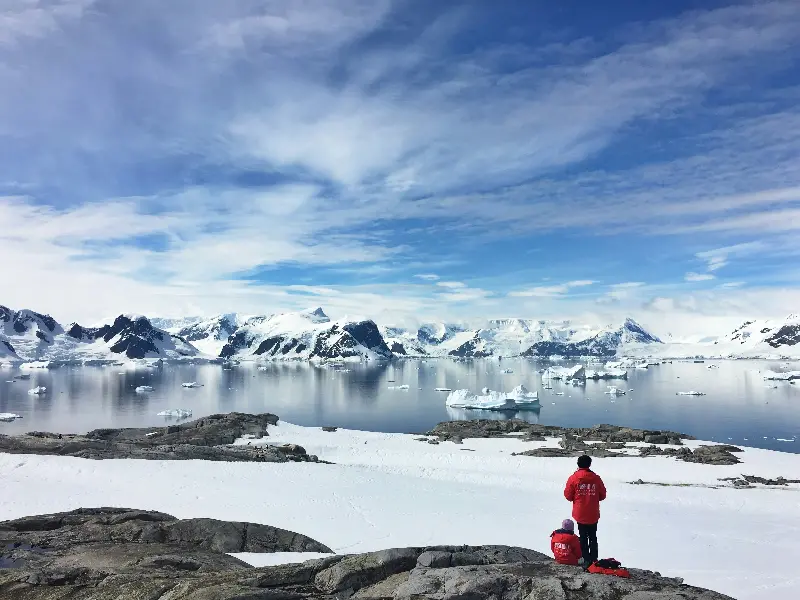
While one might think of glaciers as just ice, Antarctica contains about 60% of the planet’s freshwater. If all of this ice melted, global sea levels would rise by roughly 60 meters, completely redrawing world maps and submerging coastal cities.
10. THE HOLE IN EARTH’S GRAVITY
On Canada’s Hudson Bay, gravity is noticeably weaker than elsewhere on the planet. This phenomenon occurs because:
- Geological Structure: Unique deep-earth mass distribution.
- Post-Glacial Rebound: The crust is still "springing back" from the weight of ice age glaciers.
Walk across this area, and you’d weigh a tiny bit less—the ultimate natural diet!
Curiosity about our planet never ends when you look beyond the textbook. Earth is endlessly fascinating, full of wonders both hidden and plain to see. Next time you glance at a map, remember that these are just some of the stories our planet has to tell.