



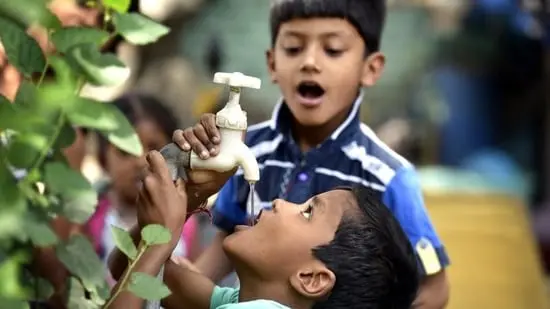
Over the years, the Jal Jeevan Mission has reshaped rural India’s drinking water landscape, bringing tap water to millions of households at an unprecedented scale. This achievement marks a major shift in how rural households access drinking water. As the Mission moves forward, its success will increasingly be reflected not only in the scale of infrastructure created, but in how consistently these systems continue to deliver quality service over time.
The focus, therefore, is now evolving, from expanding access to strengthening long-term service delivery.
Jal Mahotsav 2026, a flagship initiative of the Department of Drinking Water and Sanitation (DDWS), reflects this transition. By spotlighting grassroots participation, it reinforces a key principle: while infrastructure enables access, strong local institutions play a vital role in sustaining it.
Water supply systems are inherently complex, requiring continuous monitoring, timely maintenance, financial discipline, and coordination across multiple stakeholders. Strengthening these aspects will be essential to ensure that the benefits of the Mission are sustained over the long term. In this context, functionality becomes a central pillar of success.
The sustainability of water systems rests fundamentally on rural governance. The 73rd Constitutional Amendment (1992) placed the responsibility for drinking water supply and sanitation with Panchayati Raj Institutions, recognising that local management is key to long-term service delivery. As the Mission progresses, continued emphasis on clarity of roles, institutional capacity, and sustained support will further strengthen this decentralised framework.
Village Water and Sanitation Committees (VWSCs) are at the centre of this effort. Their responsibilities extend beyond oversight to include quality testing, day-to-day operations, tariff setting, financial management, and record-keeping. Continued investment in strengthening these institutions will be critical to ensuring that systems remain robust and responsive.
Operations and maintenance (O&M) will play an increasingly important role in this next phase. Reliable water supply depends on routine upkeep, timely repairs, and efficient resource use, processes that are continuous and require both technical and managerial capabilities at the local level.
In Multi-Village Schemes (MVS), these considerations take on added significance. With VWSCs responsible for Bulk Water Supply (BWS) charges based on volumetric pricing, effective planning and efficient water use will be important to maintain both service quality and financial sustainability.
Financial sustainability remains a key enabler of long-term functionality. By systematically estimating O&M costs, such as energy, repairs, personnel, and replacements, local bodies can design practical tariff systems and strengthen cost recovery mechanisms. This helps ensure that systems have the resources needed to operate consistently.
At the same time, VWSCs play a vital operational role on the ground, overseeing water quality testing, managing service delivery, procuring materials, and addressing local issues. This involvement strengthens accountability and reinforces local stewardship of water systems.
Rural water supply systems also vary in structure. In MVS models, operations span both the Bulk Water Supply (BWS) system and the In-Village Distribution Network (IVDN). While higher-level infrastructure may be managed by government departments or external agencies, in-village systems remain under local institutions. Strengthening coordination across these levels will be important to ensure seamless service delivery.
As the system evolves, the role of government continues to be enabling and supportive, through capacity building, major repairs, source sustainability efforts, and water quality monitoring. Supporting local institutions while enabling them to take ownership will remain central to building resilient systems.
The next phase of the Jal Jeevan Mission presents an opportunity to consolidate these gains. Continued focus on governance, institutional capacity, and financial and operational sustainability will help ensure that the progress achieved translates into reliable, long-term service delivery.
Expanding access was a significant milestone. Strengthening functionality and sustaining these systems over time will define the next phase of rural water security in India.
This article is authored by Gopal Naik and Ipsita Sarkar, IIM, Bangalore.